
The GBP/JPY Intraday Setup is particularly appealing because GBP/JPY is one of the most volatile currency pairs, making it a favourite among intraday traders who thrive on price swings. Understanding how to trade volatility effectively requires careful analysis of key support and resistance levels, intraday trends, momentum indicators, and risk management strategies. By structuring trades around these elements, traders can capitalize on both rapid moves and predictable pullbacks.
Identifying Key Levels
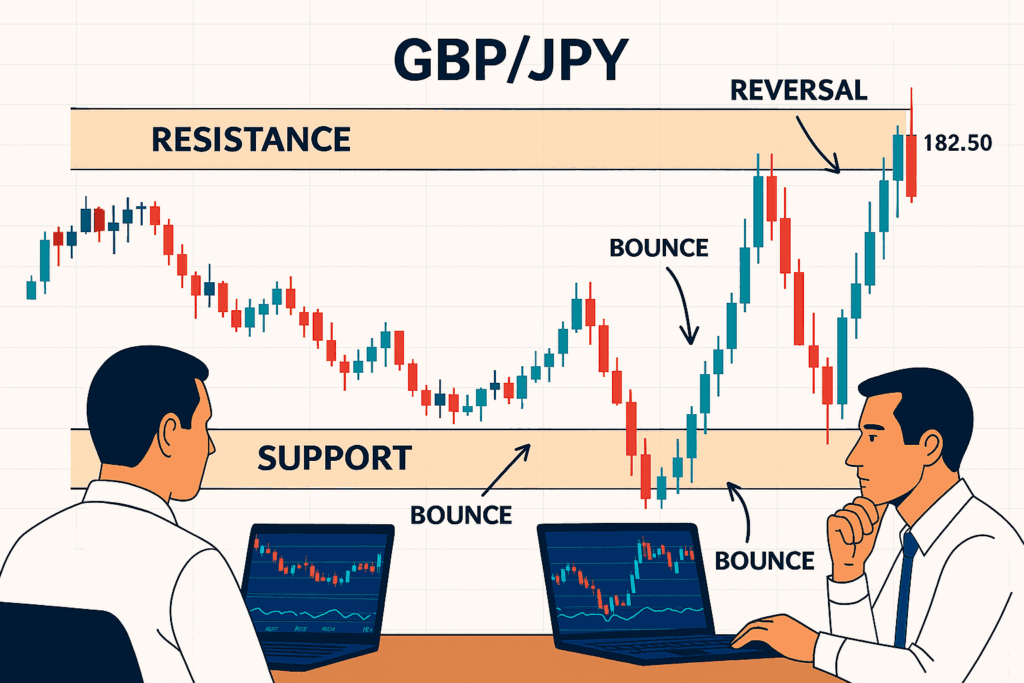
Successful intraday trading begins with pinpointing high-probability price zones:
- Support Levels: Look for areas where price has previously bounced, often near recent intraday lows or significant psychological levels like 180.00 or 182.50.
- Resistance Levels: Zones where price previously reversed downward, often found near round numbers, prior highs, or pivot points.
For GBP/JPY, the 15-minute, 30-minute, and 1-hour charts are particularly useful for spotting intraday support and resistance, while the 5-minute chart can help refine entries and exits.
Trend Analysis
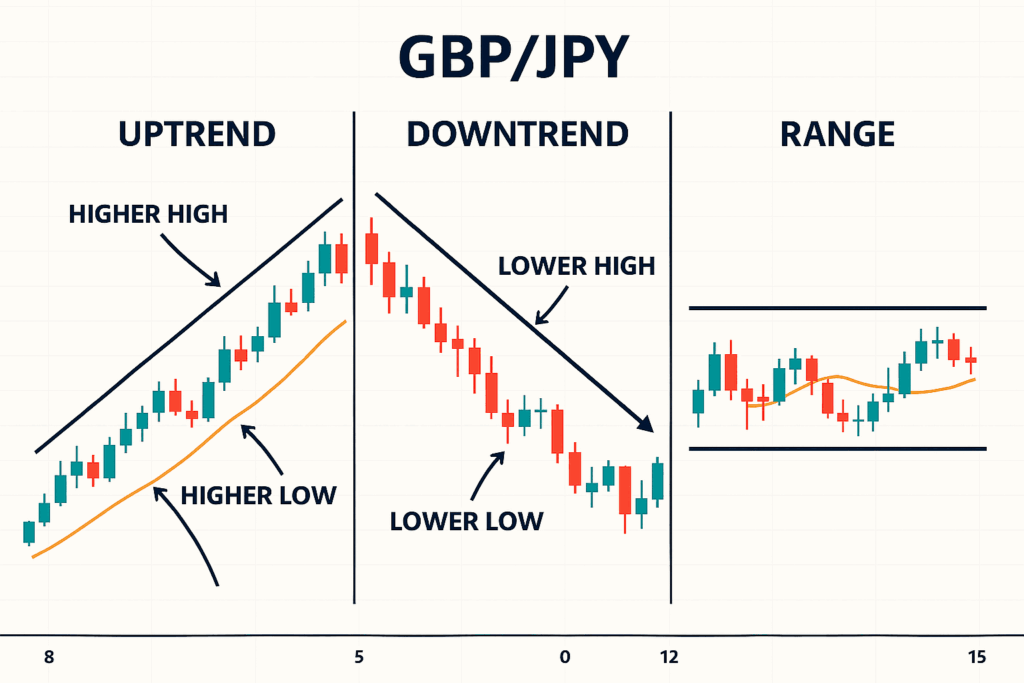
Recognizing the intraday trend is essential for aligning trades with market momentum:
- Bullish Trend: Higher highs and higher lows suggest buying pressure. Traders can look for pullbacks to support levels to enter long positions.
- Bearish Trend: Lower highs and lower lows indicate selling pressure. Pullbacks toward resistance levels provide potential short opportunities.
- Sideways Range: GBP/JPY often consolidates before explosive moves. Breakouts from tight ranges can offer high-risk, high-reward trades.
Trendlines, moving averages, and ADX can confirm the strength and direction of intraday trends.
Momentum and Entry Confirmation
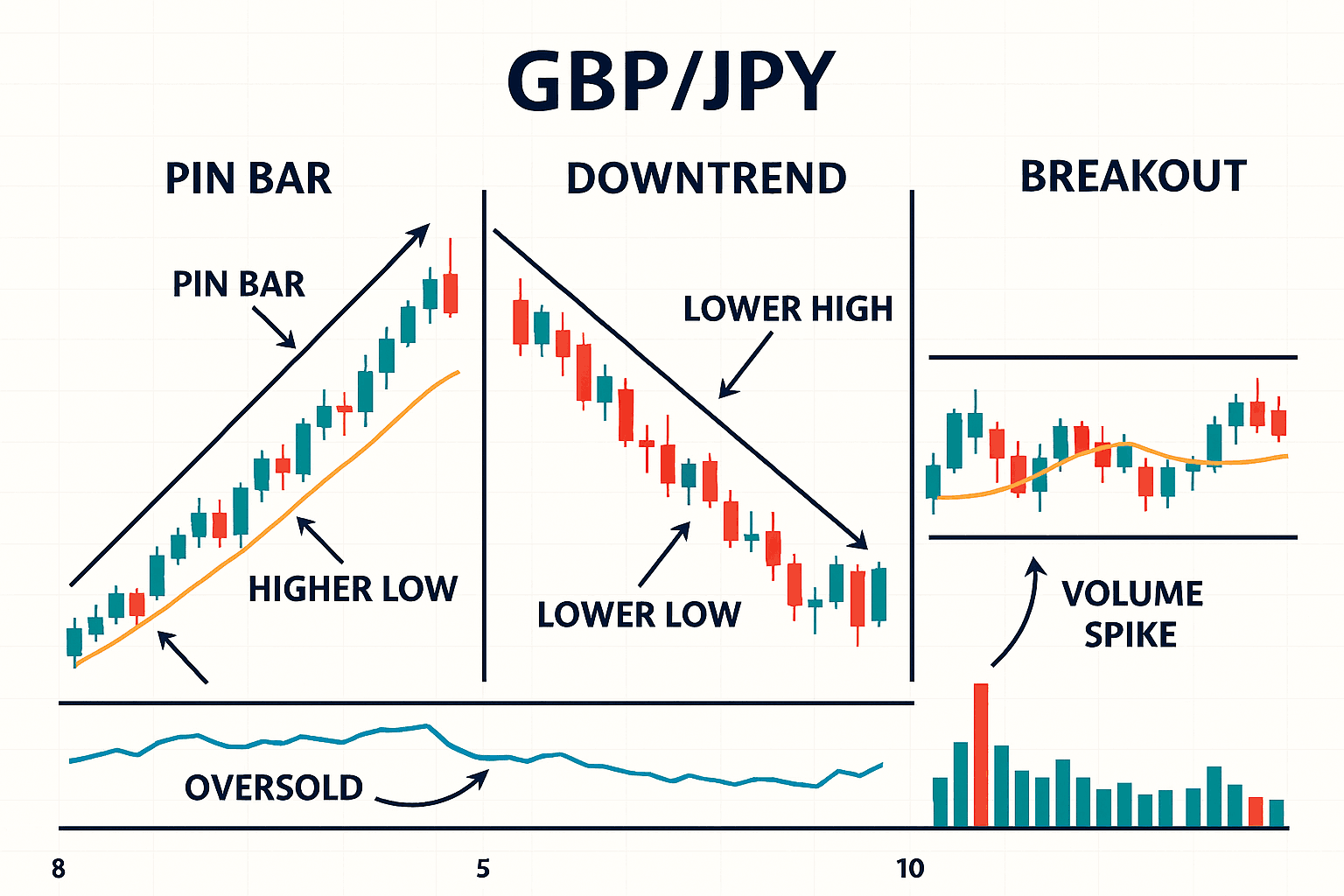
Once support or resistance levels are identified, confirmation is needed to validate entries:
- Candlestick Patterns: Reversal formations such as pin bars, hammers, or engulfing candles at key levels signal potential moves.
- Oscillators: RSI and Stochastic indicators can reveal overbought or oversold conditions for timing entries.
- Volume: Spikes in trading volume often confirm breakout attempts and add reliability to intraday setups.
Entry Ideas
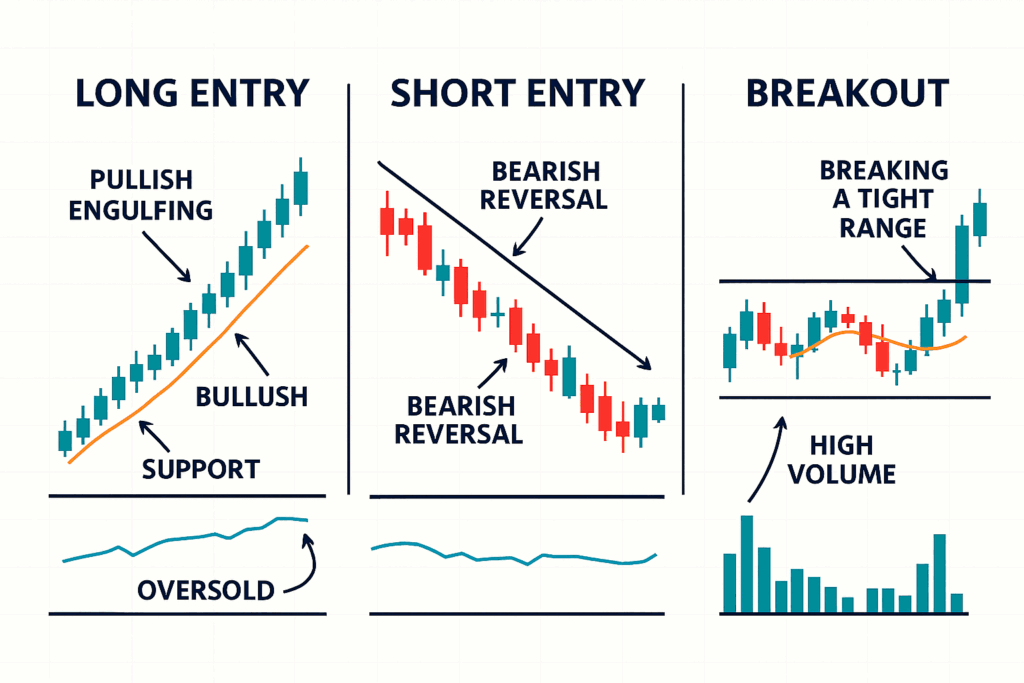
For GBP/JPY, intraday setups may include:
- Long Entry on Pullback: In an uptrend, wait for the pair to retrace to strong intraday support. Confirmation comes from a bullish candlestick pattern and momentum indicators moving upward from oversold levels.
- Short Entry on Resistance: In a downtrend, watch for price to retest resistance. A bearish reversal candle with declining momentum can validate a short entry.
- Breakout Play: If GBP/JPY is trading in a tight range, a breakout above resistance or below support, coupled with a volume spike, signals a potential high-velocity trade.
Risk Management
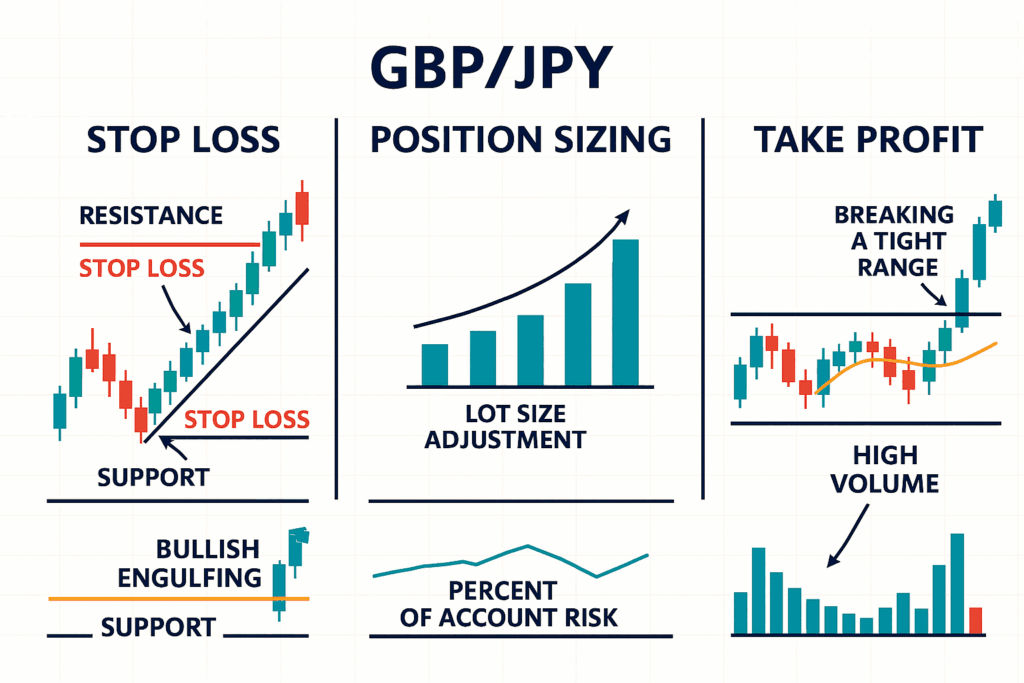
Effective risk management is crucial, especially with GBP/JPY’s volatility:
- Stop-Loss Placement: Place stops just beyond support or resistance levels to protect against false breakouts.
- Position Sizing: Adjust trade size based on account balance and acceptable risk, typically 1–2% of capital per trade.
- Profit Targets: Use recent highs/lows, pivot points, or measured moves to set realistic take-profit levels.
Example in Action
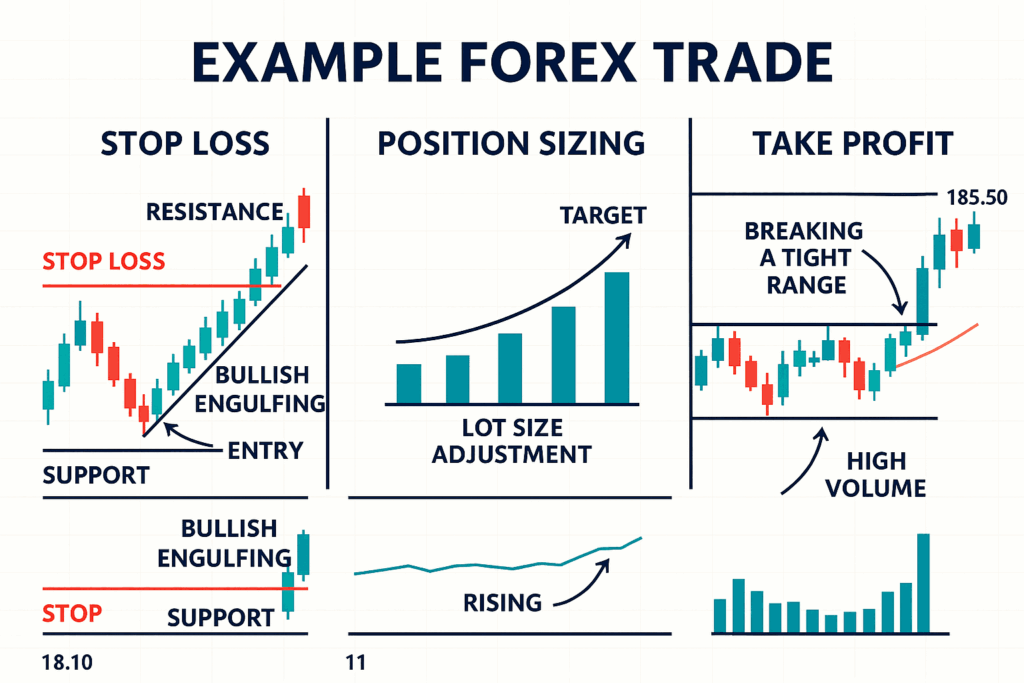
Suppose GBP/JPY is trading at 181.50 in a confirmed uptrend. Intraday support is at 181.00, and resistance is at 182.50. A pullback forms a bullish engulfing candle near 181.05, confirmed by RSI moving from 35 toward 50. Entering a long trade at 181.10 with a stop at 180.80 and a target at 182.50 creates a favorable risk/reward setup.
Conclusion

Trading GBP/JPY intraday requires combining technical analysis, volatility awareness, and disciplined risk management. Identifying key levels, confirming entries with momentum indicators, and maintaining precise stops and targets helps traders navigate the pair’s rapid price movements.
By following structured setups and avoiding impulsive trades, intraday traders can take advantage of GBP/JPY volatility, turning short-term price swings into repeatable opportunities for profit while managing the inherent risk of this high-volatility currency pair.