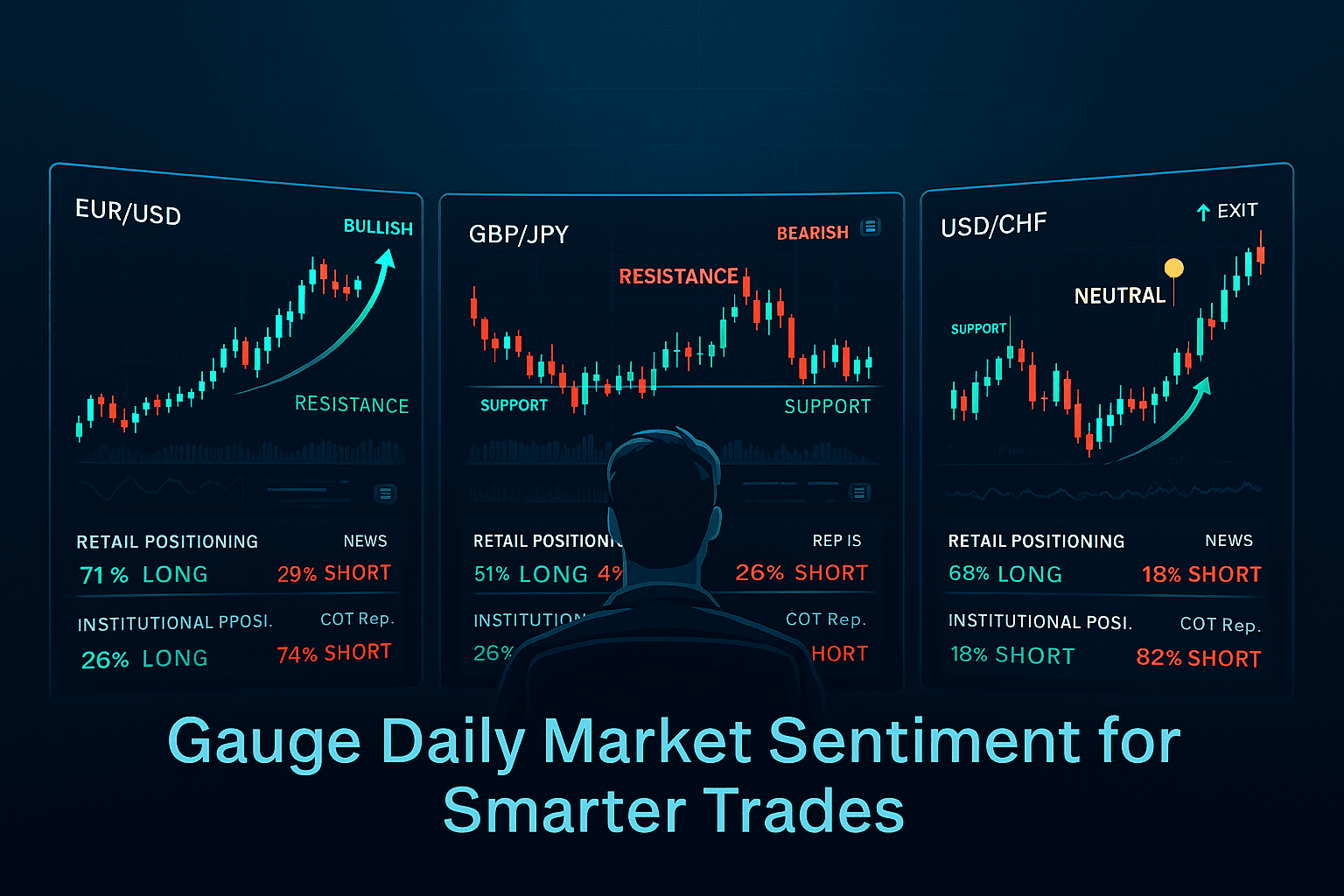
Understanding market sentiment is a crucial step before placing any trade. While technical indicators and economic calendars provide data points, sentiment analysis gives traders a sense of how the majority of market participants are positioned. By gauging daily sentiment, traders can anticipate potential price reactions, identify high-probability setups, and avoid going against prevailing market psychology.
What Is Market Sentiment?
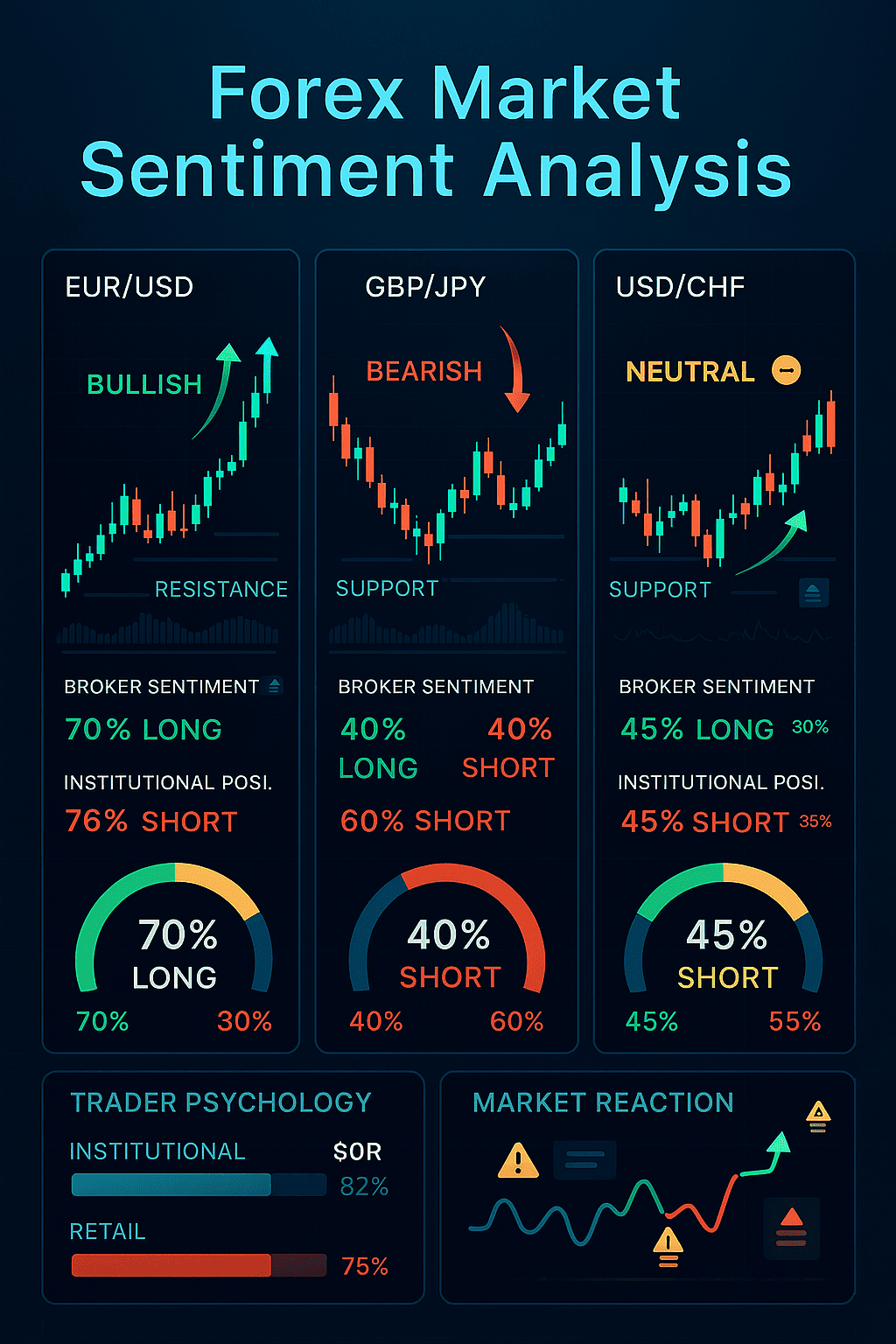
Market sentiment reflects the overall attitude of traders toward a particular currency pair or the broader forex market. It can be bullish, bearish, or neutral, depending on factors such as recent price movements, news events, and economic releases. Unlike technical analysis, which focuses on price patterns, sentiment analysis attempts to measure the psychology driving market participants.
Indicators and tools commonly used to gauge sentiment include:
- Commitment of Traders (COT) Reports: Shows how institutional and retail traders are positioned.
- Broker Sentiment Tools: Many brokers display the percentage of clients long or short on a specific pair.
- News Flow and Economic Releases: Market reactions to unexpected data can reveal trader sentiment shifts.
Steps to Gauge Daily Sentiment
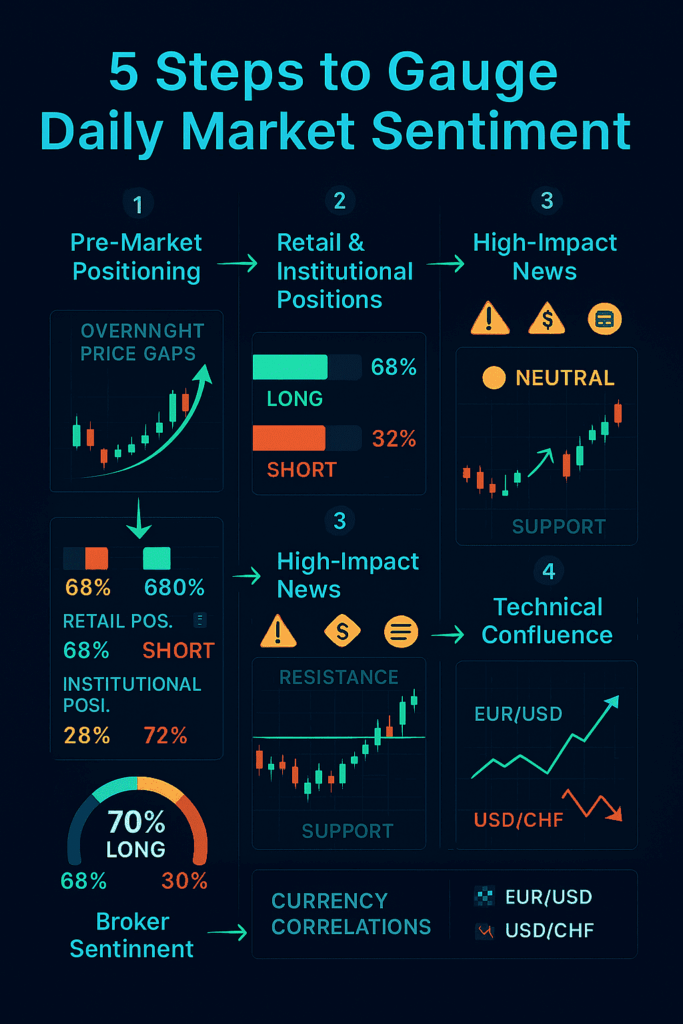
- Analyze Pre-Market Positioning: Start by reviewing overnight moves and early session price action. If a pair gaps higher or lower at the open, it may indicate market consensus on direction for the day.
- Check Retail and Institutional Positions: Platforms that provide retail trader sentiment can show extremes in positioning. If the majority are long while price is peaking, this may signal a potential reversal, as retail traders often act counter to institutional flows.
- Monitor High-Impact News: Key data releases such as CPI, GDP, or central bank announcements can dramatically shift sentiment. Observe how prices react immediately post-release to gauge short-term market psychology.
- Use Technical Confluence: Combine sentiment with support and resistance levels. For example, if sentiment is bullish but price is at strong resistance, the probability of a pullback increases.
- Track Currency Correlations: Sentiment in correlated pairs can provide additional clues. For instance, bullish EUR/USD sentiment may coincide with weakness in USD/CHF due to inverse correlations.
Practical Example
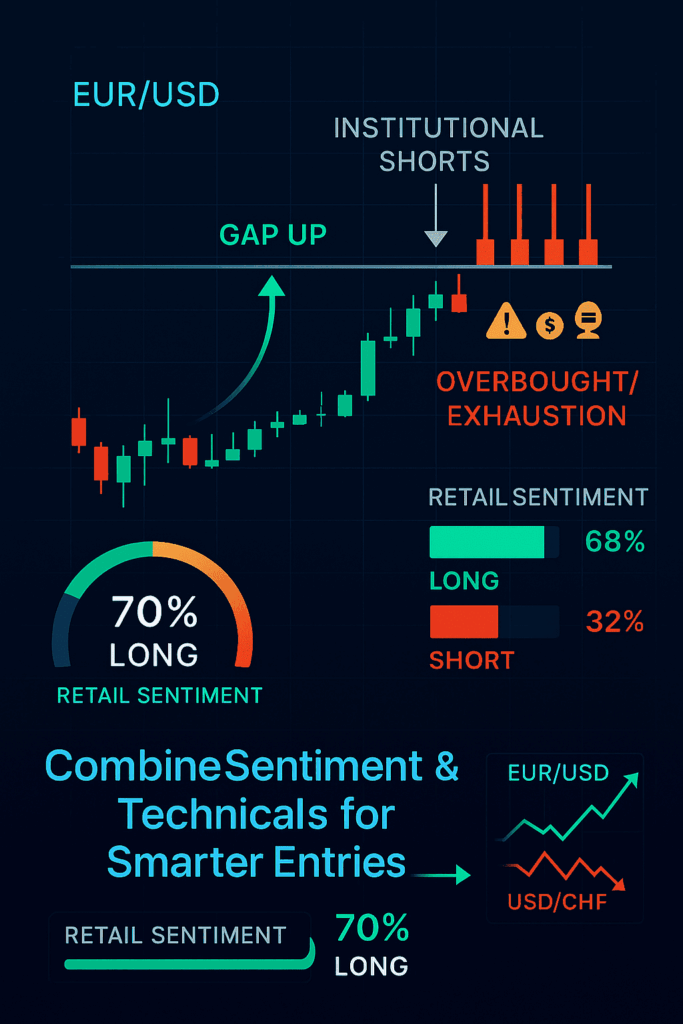
Suppose EUR/USD opens with a gap up after stronger-than-expected Eurozone data. Retail sentiment shows 70% of traders already long, and price is approaching a key intraday resistance. By combining these factors:
- Institutional flows may be entering short positions at resistance.
- Retail overexposure signals potential exhaustion in buying pressure.
- Traders can prepare for a short-term pullback, even in a broader uptrend.
This approach doesn’t guarantee a reversal, but it provides context for managing risk and timing entries more effectively.
Using Sentiment to Refine Entries and Exits
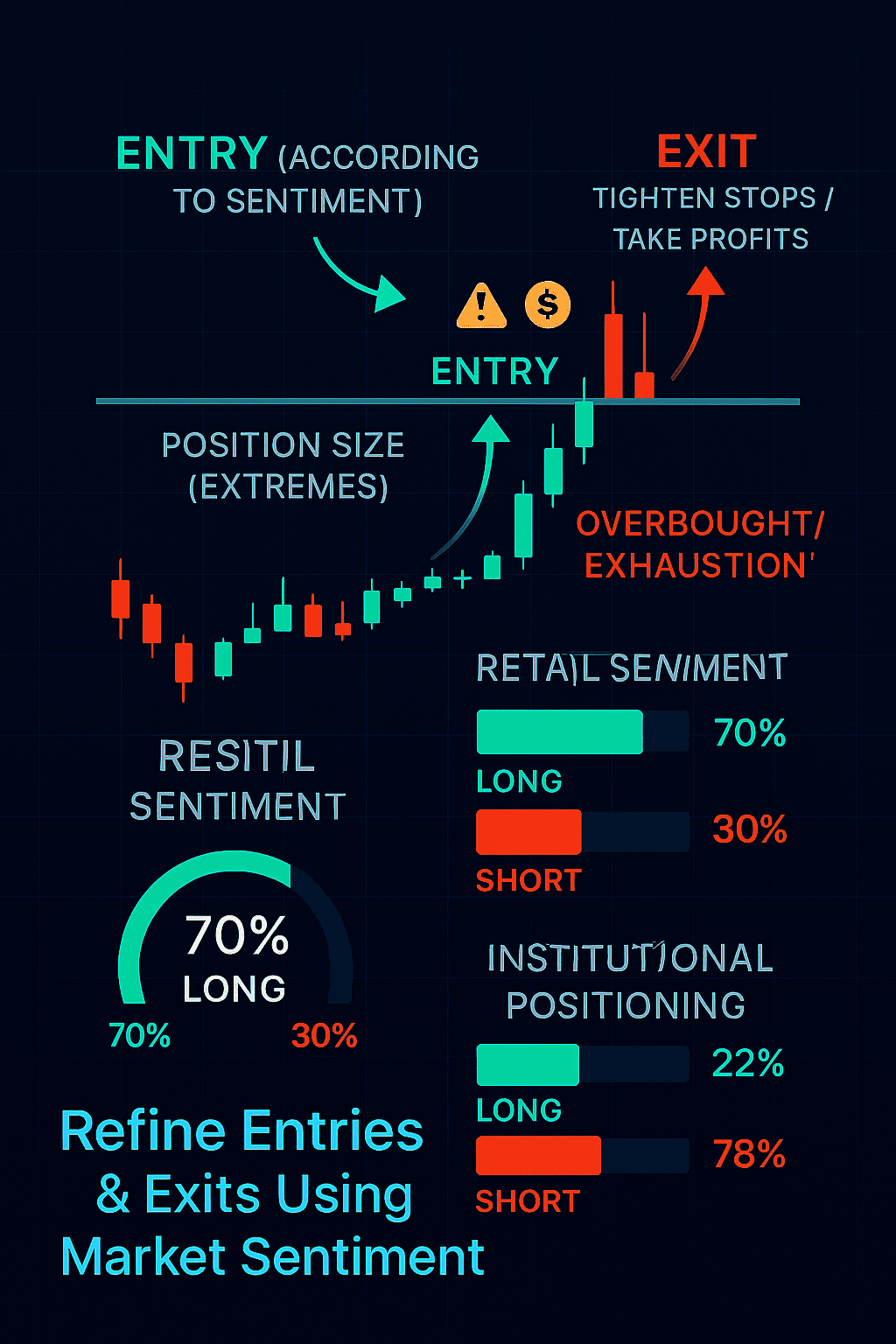
- Entry Timing: Align your trade with the prevailing sentiment, but ensure technical confirmation. Entering against overwhelming market consensus can be risky unless strong contrarian signals exist.
- Position Sizing: Adjust trade size based on sentiment extremes. Overcrowded trades may require smaller positions to manage potential reversals.
- Exit Strategy: Monitor sentiment continuously. Sudden shifts in news flow or trader positioning can suggest tightening stops or booking profits early.
Conclusion
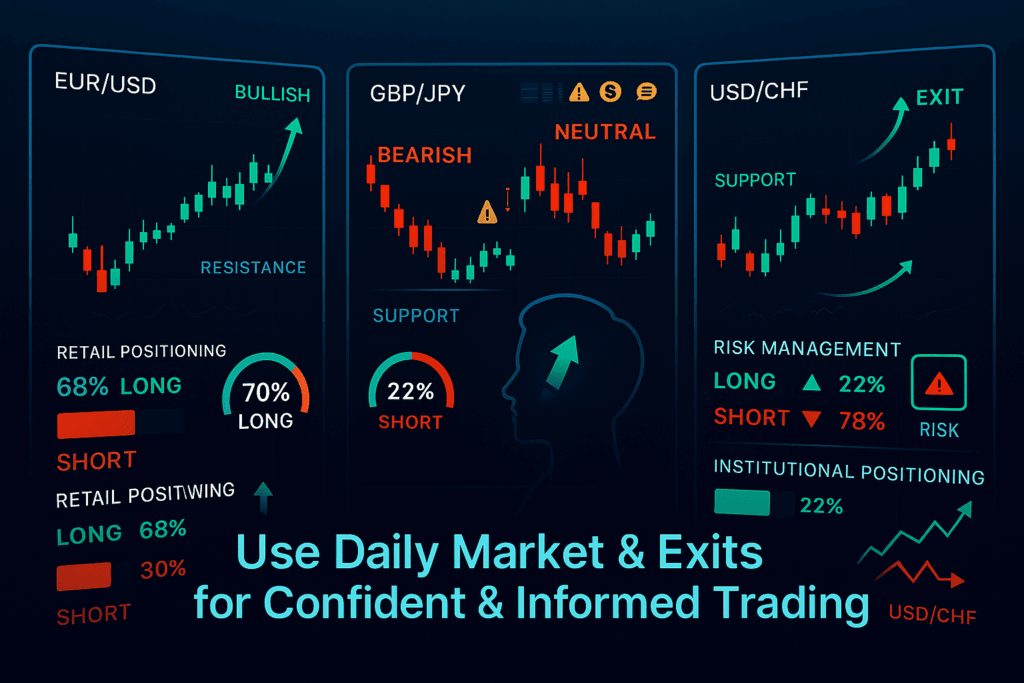
Daily market sentiment analysis is a powerful complement to technical and fundamental tools. By understanding how traders are positioned, the potential reactions to news events, and the prevailing psychology of the market, traders can make more informed decisions. Sentiment gauges risk appetite, identifies opportunities, and helps avoid emotional or impulsive trades.
Integrating sentiment analysis into your daily routine requires observation, patience, and a willingness to adapt. When combined with proper risk management and technical confluence, it becomes a valuable asset for any trader seeking to enter trades with confidence and clarity in the dynamic forex market.