
Trading the EUR/USD pair requires a combination of technical analysis, market awareness, and timing. A Live EUR/USD Setup Breakdown helps traders understand key levels, identify potential entry points, and manage risk effectively. By focusing on support and resistance, trend dynamics, and momentum indicators, traders can structure actionable setups for this major currency pair.
Identifying Key Levels
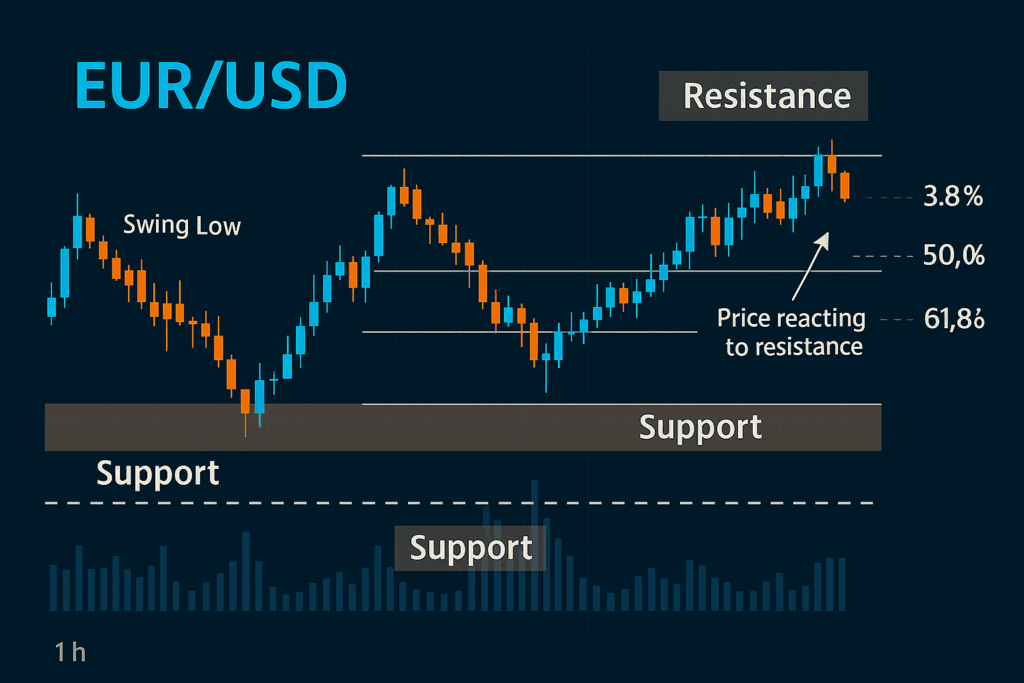
The first step in any EUR/USD setup is recognizing critical support and resistance levels. These levels act as psychological barriers where price may either reverse or consolidate:
- Support Levels: Areas where buying interest outweighs selling pressure. Commonly observed near previous swing lows or Fibonacci retracement zones.
- Resistance Levels: Price points where selling dominates. Often found near prior highs, pivot points, or round numbers such as 1.1200, 1.1300, etc.
Monitoring intraday charts (15-min, 1-hour, and 4-hour) allows traders to spot areas where price has historically reacted, forming potential entry and exit zones.
Trend Analysis
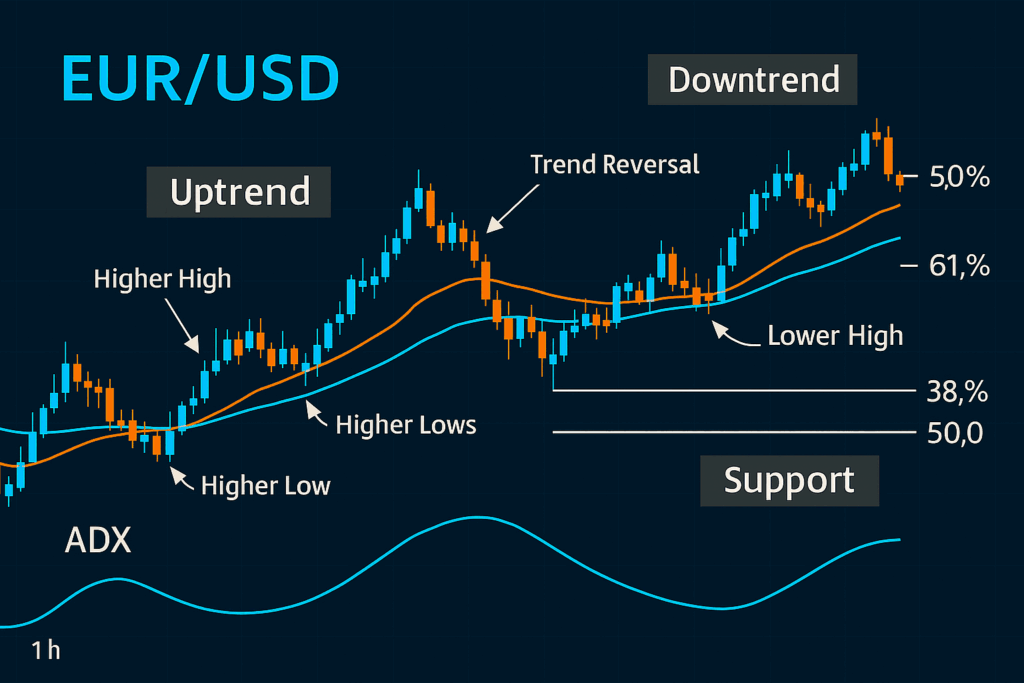
Understanding the current trend is crucial for aligning trades with market momentum:
- Uptrend: Higher highs and higher lows indicate bullish sentiment. Traders look for pullbacks toward support to enter long positions.
- Downtrend: Lower highs and lower lows suggest bearish momentum. Pullbacks toward resistance zones offer potential short entries.
- Range-Bound Markets: When price oscillates between established support and resistance, breakout or reversal strategies can be applied cautiously.
Indicators like moving averages, trendlines, and the Average Directional Index (ADX) provide confirmation of trend strength and direction.
Momentum and Confirmation
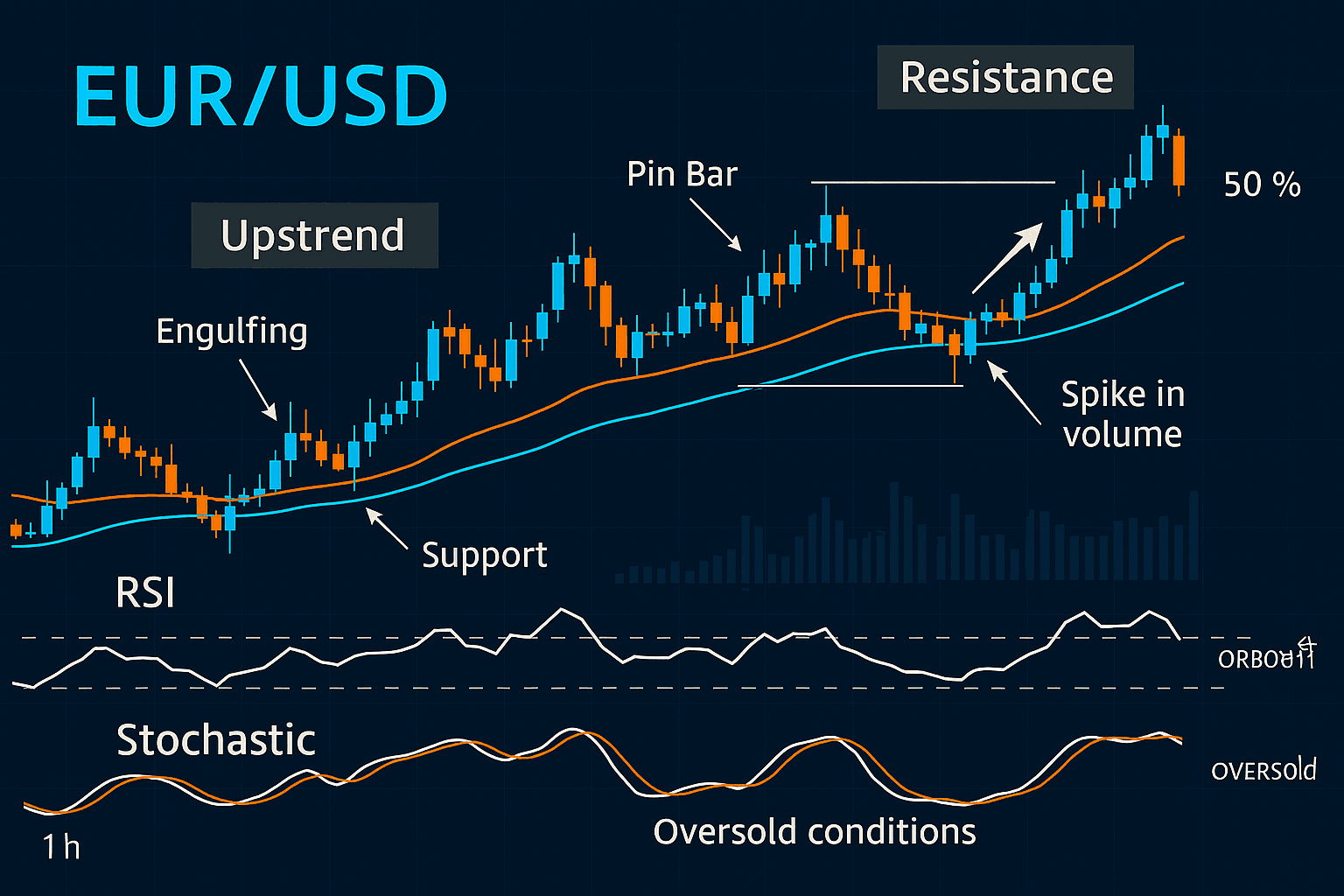
Once key levels are identified, traders seek confirmation signals before entering a trade:
- Candlestick Patterns: Engulfing, pin bars, and hammers at critical support or resistance indicate potential reversals.
- Oscillators: RSI and Stochastic can highlight overbought or oversold conditions, helping time entries.
- Volume Analysis: Sudden spikes in trading volume can validate breakout moves and add confidence to trade execution.
Entry Ideas
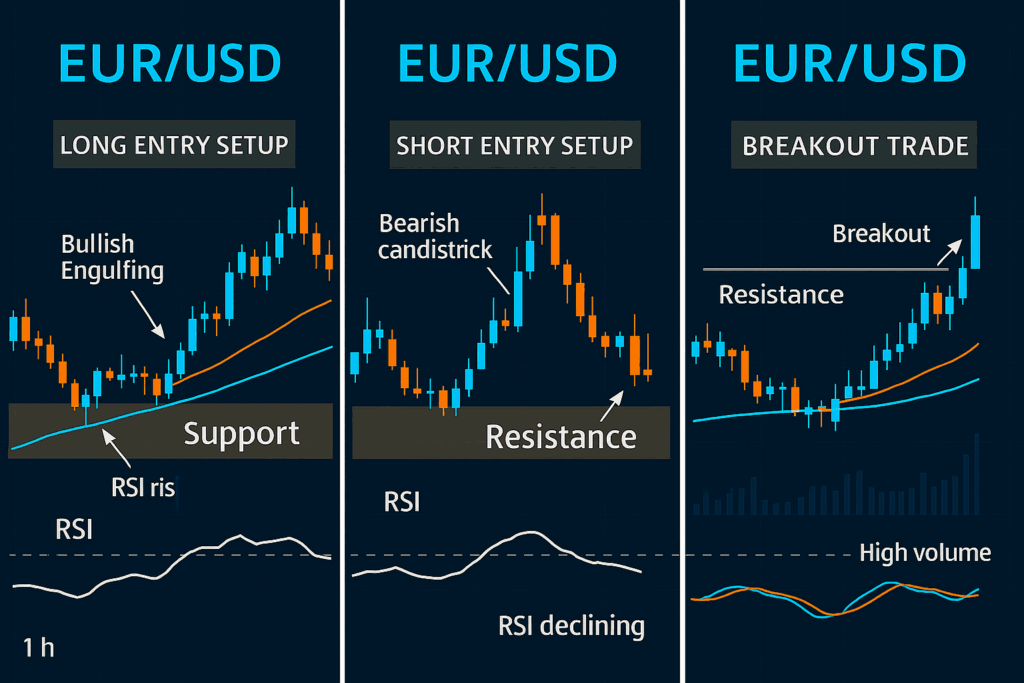
A typical EUR/USD live setup may involve the following:
- Long Entry on Pullback: In an uptrend, wait for the price to retrace to a strong support zone, ideally confirmed by a bullish candlestick pattern and RSI rising from oversold conditions.
- Short Entry on Resistance Test: In a downtrend, anticipate a retest of resistance. Confirmation comes from bearish candlestick patterns and decreasing momentum indicators.
- Breakout Play: When the pair approaches a consolidation zone or range boundary, a breakout above resistance or below support, coupled with volume confirmation, provides an aggressive entry opportunity.
Risk Management
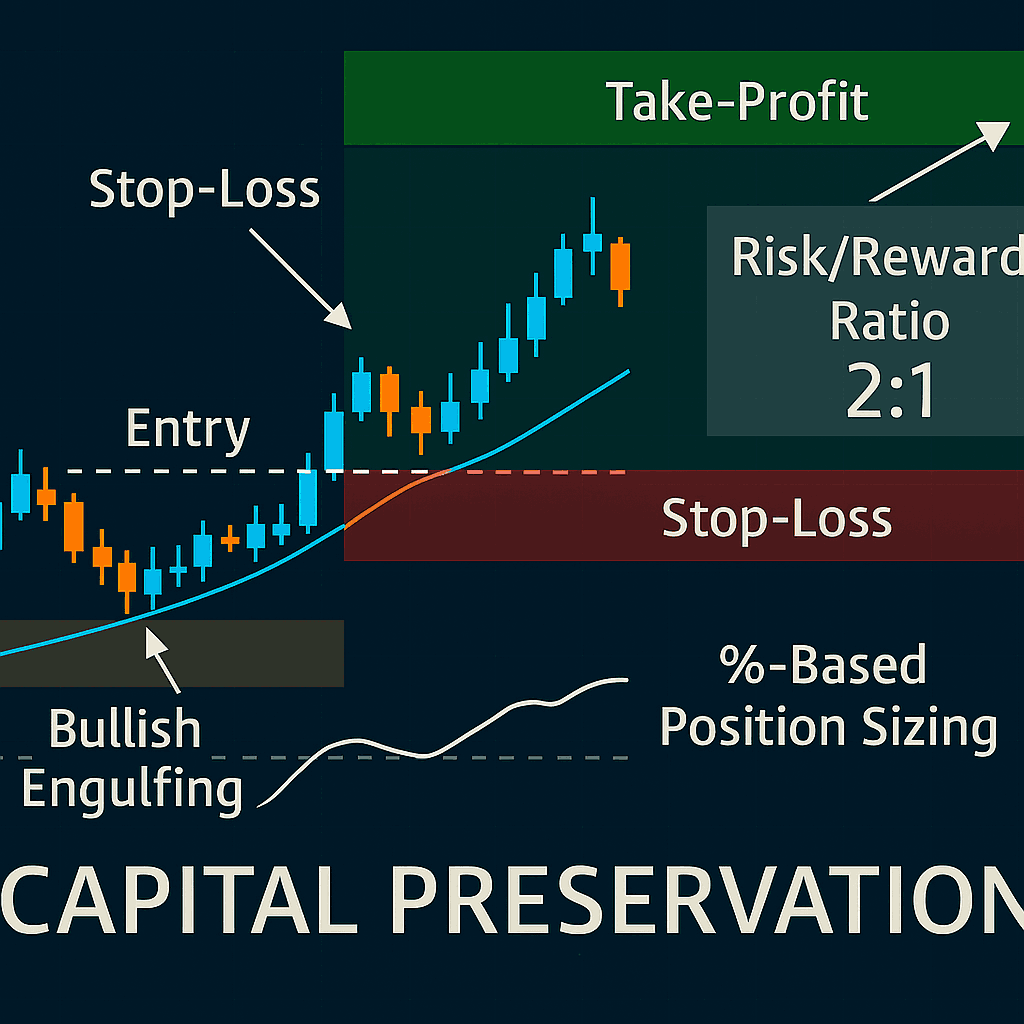
Even with a clear setup, risk management remains critical:
- Stop-Loss Placement: Typically placed beyond the support/resistance zone to allow minor price fluctuations without triggering premature exits.
- Position Sizing: Adjust lot size according to account equity and acceptable risk per trade, often 1–2% of capital.
- Profit Targets: Identify realistic targets using prior swing points, Fibonacci extensions, or measured move projections.
Example in Action
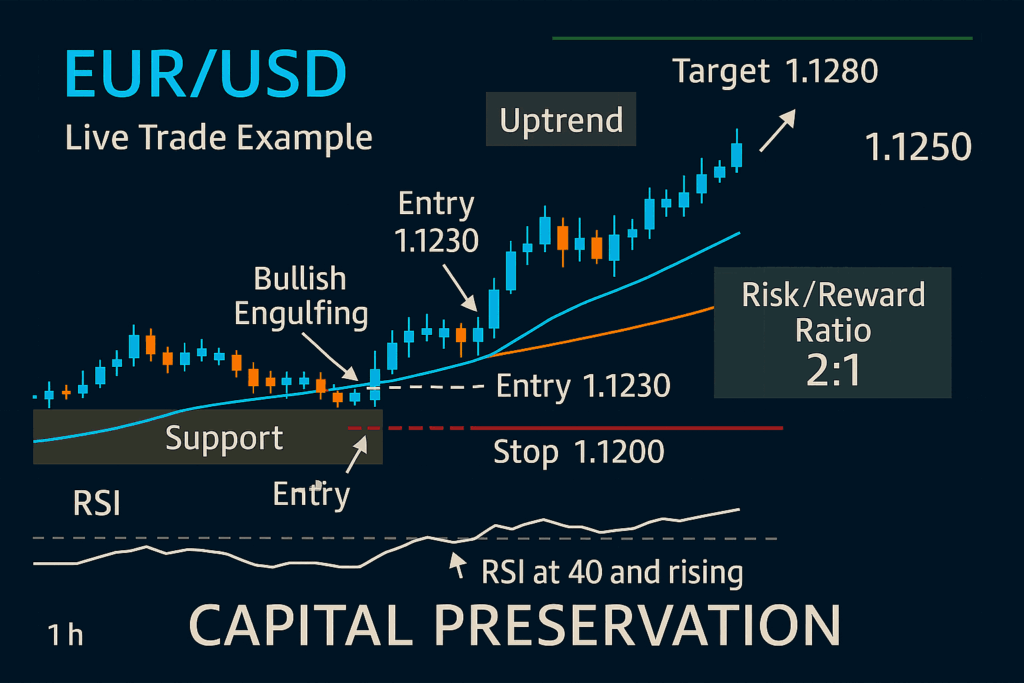
Imagine EUR/USD trading at 1.1250 in a confirmed uptrend. Support lies at 1.1220, and immediate resistance at 1.1280. A pullback toward 1.1220 forms a bullish engulfing candlestick with RSI rising from 40. A long entry at 1.1230 with a stop at 1.1200 and a target at 1.1280 offers a favorable risk/reward setup.
Conclusion
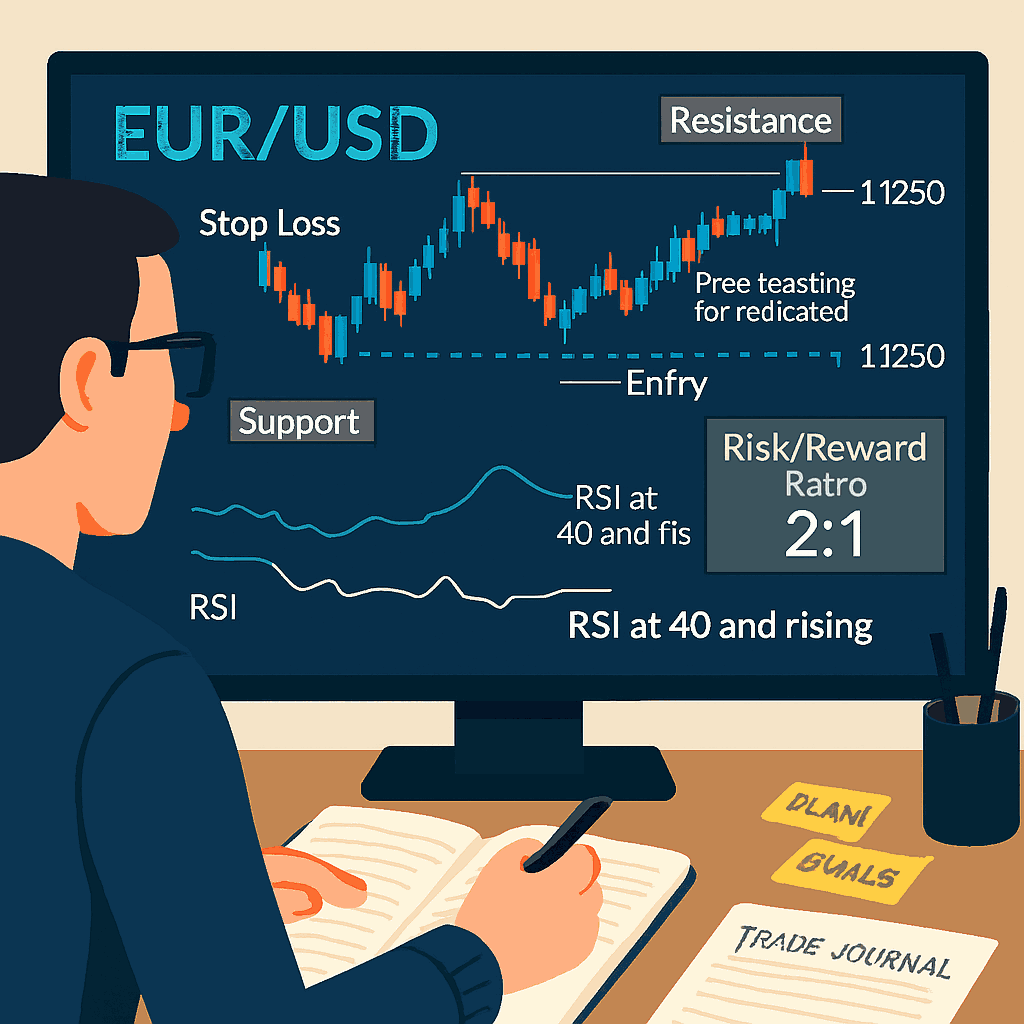
Breaking down a live EUR/USD setup involves integrating key levels, trend analysis, momentum confirmation, and disciplined risk management. By observing intraday reactions to support and resistance, validating setups with candlestick patterns and indicators, and applying strict risk rules, traders can create actionable entries with higher confidence.
Consistently applying these principles transforms live market observations into structured trading opportunities, turning EUR/USD setups into a repeatable, strategic approach for short-term and swing traders alike.